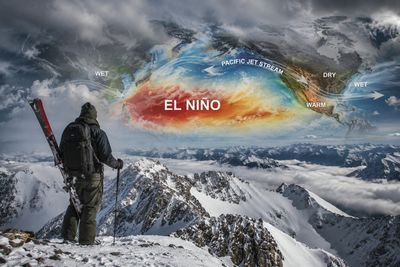
A look at how a developing El Niño could influence snowfall around the globe
Meteorologists around the world are closely watching the Pacific Ocean as conditions point toward the development of El Niño during 2026. Several leading climate agencies now indicate a high likelihood that El Niño will persist into the 2026/27 winter season. While no seasonal forecast is ever guaranteed, the signal is strong enough that skiers should begin paying attention.
For those of us who spend our winters chasing snow, El Niño can be one of the most important climate patterns on Earth. But what exactly is El Niño? And what could it mean for skiing around the world?
What Is El Niño?
El Niño is a naturally occurring climate pattern characterized by warmer-than-average sea surface temperatures across the central and eastern tropical Pacific Ocean. Those warmer ocean temperatures influence atmospheric circulation around the globe, altering storm tracks, temperatures, and precipitation patterns. In simple terms, what happens in the Pacific Ocean often influences where winter storms ultimately travel.
North America
Historically, El Niño winters have tended to favor the southern tier of the United States, often delivering stronger storm activity to California and portions of the Southwest. For skiers, that can be very good news for:
- Southern California mountains
- Arizona
- New Mexico
- Southern Colorado
- Utah
The Pacific Northwest sometimes experiences warmer and drier conditions during strong El Niño years, although individual storms and local weather patterns can still produce excellent seasons.
Colorado often becomes one of the most interesting wild cards. Some El Niño winters have produced outstanding snowfall, while others have been closer to average. Much depends on how individual storm tracks develop throughout the season.
The Alps
Europe's relationship with El Niño is less direct than North America's. The Alps are influenced by a variety of atmospheric patterns that can sometimes override El Niño's effects. Historically, strong El Niño winters have often been associated with milder conditions across parts of Europe, but regional variations can be significant. The good news for Alpine skiers is that modern snowmaking, high elevations, and extensive terrain generally make destinations such as Chamonix, Zermatt, Kitzbühel, and Cortina remarkably resilient regardless of broader climate patterns.
Japan
Japan's legendary snowfall is largely driven by cold Siberian air flowing across the Sea of Japan.
Because of this, the relationship between El Niño and Japanese snowfall is complex. Some El Niño winters have produced below-average snowfall in parts of Japan, while others have still delivered incredible powder seasons. The takeaway? Never bet against Japow. The long-term climate signals matter, but local weather patterns often determine whether Niseko experiences another unforgettable winter.
The Andes
Southern Hemisphere skiers should pay particularly close attention to El Niño. Historically, El Niño years have often favored portions of the central Andes, including many of Chile's major ski regions. For destinations such as Valle Nevado, La Parva, and El Colorado, El Niño can sometimes increase the likelihood of productive snowfall seasons. Of course, every year is different, but many South American skiers view El Niño with cautious optimism.
What It Means for Powder Bound Travelers
One of the advantages of modern ski travel is flexibility. Whether you're skiing Utah powder, exploring the Alps, chasing Japow, or heading south to the Andes, today's travelers have more options than ever before. At Powder Bound, we believe great ski seasons aren't found by sitting still—they're found by exploring. That's one reason our adventures span multiple regions, countries, and mountain cultures. If one destination experiences an average winter, another may be having a season for the ages.
Final Thoughts
El Niño is not a snow forecast. It's a climate signal. And while it may provide clues about the coming winter, no climate pattern can perfectly predict where the deepest powder days will happen. What we do know is this: Somewhere, the snow will be incredible. The challenge—and the adventure—is finding it. And that's exactly what skiers have been doing for generations.